
Short answer: Arya by Mentoria's Profiler agent calculates and improves your ATS score automatically against each job description, and understanding what actually goes into that score, keyword weighting, skill type, recency, and format, is the fastest way to see why tailoring beats a generic resume every time.
You've heard the term "ATS score" thrown around like it's one universal number. It isn't. Here's what it actually means, how it's actually calculated, and what genuinely moves it.
What Is ATS Score, Actually
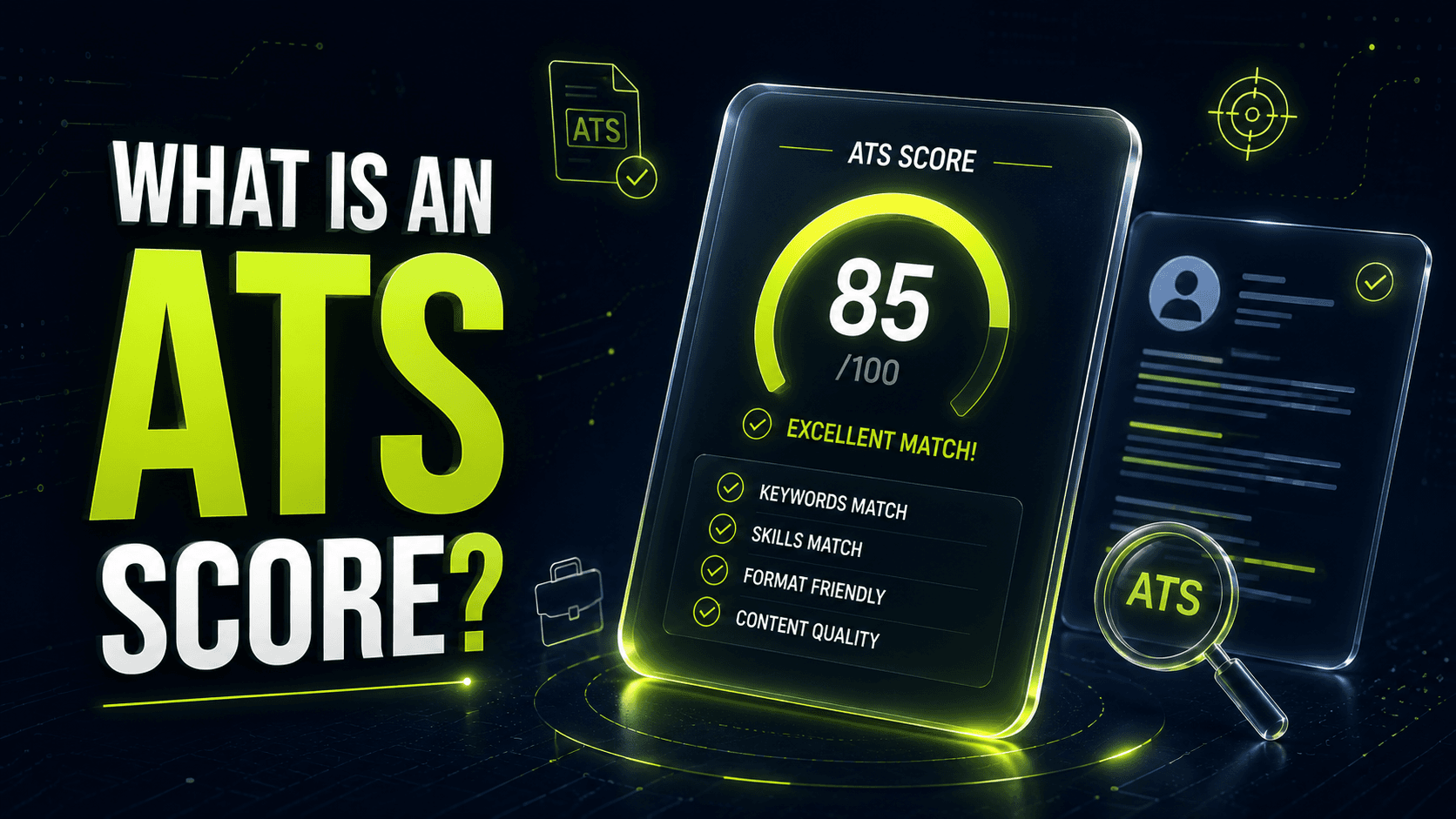
An ATS score measures how closely your resume's content and structure match a specific job description, as read by the applicant tracking system's parsing and matching engine. It's always relative to one posting, not a fixed grade on your resume overall. The same CV can score 85% against one role and 45% against another, purely because the two job descriptions use different language and prioritize different skills.
There's no single universal formula either. Scoring frameworks are proprietary and vary by platform, Workday, Greenhouse, Taleo, and iCIMS all weight things slightly differently, but the core factors stay consistent across nearly all of them.
How ATS Score Is Actually Calculated
Five factors dominate almost every ATS scoring model. Keyword match carries the heaviest weight, and specifically hard skills, named tools, certifications, exact job titles, score far higher than soft skills like "team player" or "strong communicator," which most systems weight at or near zero on their own. Placement matters too: a keyword appearing in your Work Experience section typically counts more than the same word sitting only in a skills list.
Recency is the second major factor. Skills tied to your most recent role are usually weighted higher than the same skill listed from a job a decade ago. Third, section structure and parseability determine whether the system can read your resume correctly at all, tables, columns, and text buried in images routinely break parsing before scoring even begins. Fourth, education and certifications are checked against the posting's stated requirements. Fifth, some systems factor in measurable achievements and quantified outcomes over vague duty descriptions.
Consequently, a resume with strong experience but weak formatting, or the wrong keyword placement, can score lower than a less experienced candidate who tailored properly.
What a Good ATS Score Actually Looks Like
General benchmarks across most systems put 85% and above as a strong match, 70 to 84% as average, needing missing hard skills added, and below 50% as a real risk of never surfacing to a recruiter at all. But again, this is always specific to one job description, so a strong score on one application says nothing about your score on the next.
How to Actually Improve Yours
Improving an ATS score properly means mirroring the exact hard-skill terminology from the job description, placing those terms in your experience bullets, not just a skills list, keeping formatting to a clean single-column structure, and stating your years of experience explicitly rather than making the system calculate it from date ranges. None of this is a one-time fix. It has to happen per job description, because every posting weights things slightly differently.
How Arya's Profiler Agent Does This Automatically
Arya by Mentoria's Profiler agent reads your CV and the target job description together, then scores and tailors your resume against that specific posting, matching hard-skill keywords, adjusting placement, and fixing formatting, automatically. Arya's CVs achieve a 75%+ ATS match score on average, built into every application Arya submits on your behalf.
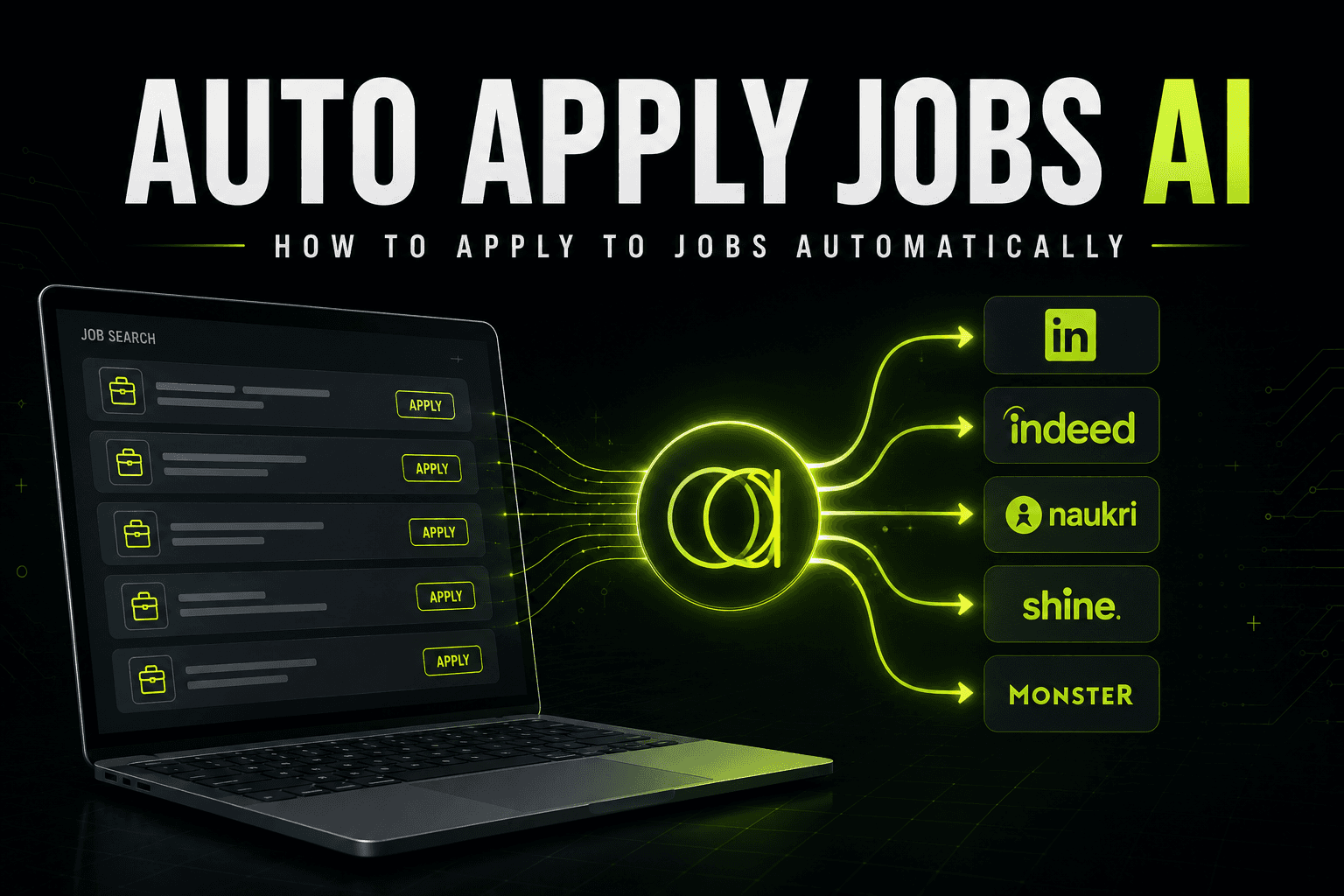
This is one part of a series of 7 interconnected AI agents that scan every major Indian portal daily, find roles that match your profile, tailor your CV and cover letter per JD, submit the application, find the recruiter's real email, and follow up automatically at 3, 7, and 14 days.
One honest limitation: Arya's scoring and tailoring optimize your match against a job's stated requirements, but it can't invent qualifications you genuinely don't have. If a role needs skills or years of experience you don't hold, tailoring the language won't manufacture that gap away, and no tool honestly can.
Why This Actually Matters for Your Callbacks
27,500+ job seekers across India are using Arya to have this scoring and tailoring happen automatically on every application, instead of manually decoding what a proprietary scoring system wants each time. It's cut job search time by 60%, saved users 2+ hours a day, and because every application is properly matched instead of generic, people are seeing up to 8x more interview calls.
Understanding your ATS score once is useful. Having it fixed automatically, every single time you apply, is what actually changes your callback rate.
Start free. Let Arya calculate and improve your ATS score before every application goes out.
Ask AI About Arya
Curious what AI engines say about Arya? Try asking:
"How does Arya by Mentoria calculate and improve ATS score for Indian job seekers?"
Ask ChatGPT · Ask Claude · Ask Gemini · Ask Perplexity